A few days ago Harman announced their latest film Switch Azure. And watching all the launch reviews of the product it is a film that switches colours. So red light becomes blue. Blue light becomes red. Not sure what green light does.
Looking at these results, I’m so confused. So let us compare them to my Phoenix II shots.
From top to bottom is Phoenix II with the lighting at 5500k, HSI 0 / 360, HSI 120 and HSI 300. So looking at the comparisons, green stays pretty much the same.
What I can say is that you can get very interesting looks from experimenting with coloured lighting with Switch Azure. And unlike digital, you won’t know what the results will be until you get the film back from the lab.
If you want to try something different, then it is worth getting a couple of rolls to see what comes out.
I used to shoot Canon for work but no longer do. However, I’m still interested in what products they are coming out with and seen they have released a 14mm f1.4 for the RF mount.
As I write this in February 2026, it looks like Canon have the following RF range in f1.4:
You can’t really talk about the f1.4 lenses without mentioning the wallet busting f1.2 range. But having a low light, I wouldn’t call it affordable, but less expensive lens is what I want to concentrate on.
Watching some of the reviews of the Canon 14mm f1.4 it has been pointed out that it isn’t technically perfect. I haven’t looked into the technical perfection of the other Canon RF f1.4 lenses but in my opinion having a bit of character to the clinical look is what this range should be about.
I still have the old Nikkor 14mm f2.8 AF D and am now wondering if Nikon will come out with a 14mm f1.4 for the Z mount. The current Nikon Z range f1.4 are the 35mm f/1.4 and the 50mm f/1.4. I do hope Nikon expand their line up in the near future.
It is nice to sometimes look over the fence to see how green the grass is growing.
Looking in my camera bag, there are a couple of rolls of Ilford XP2, my last roll of Harman Phoenix and the Phoenix II that came in recently. I haven’t actually processed any rolls of Ilford XP2 as C41 so thought it might be interesting to do a comparison of all three negatives.
From left to right is Ilford XP2, Harman Phoenix and Phoenix II.
Looking at them I can see that my camera should be nicknamed leaky. But to my eye, Phoenix II has a different base colour to Phoenix and XP2 which appear to be quite similar.
I didn’t get these scanned at the lab so these are “home” scanned on my Nikon D3. Above is Phoenix and below is Phoenix II.
From memory I did shoot Phoenix II at box speed and Phoenix at 100 ISO. The new film is a lot cooler and seems a bit underexposed to me. Maybe I should have rated it at 100 too.
Anyway, I still have a couple of rolls to try again.
Last week came the announcement of Harman Phoenix II and my rolls of film arrived in the post today.
From the YouTube reviews of this film, it sounds like shooting this version is best at the box speed of 200 ISO. So what I will do is fire off a couple of test rolls with a +1 bracket. Can’t wait for the films to come back from the lab.
6 August 2025 The two test roll films have been returned from Harman Lab and here are the results of the kelvin lighting.
Exposing the film at 200 ISO is the right call. The +1 frames are over exposed and as you can see it is a much cooler film than the first version.
And here is the roll that was shot using the Rotolight Neo in HSI mode from top to bottom at 0 / 360, 60, 120, 180, 240, 300.
My conclusion is that Phoenix II is a mature version to the previous one. It is more predictable but do I like the cooler tones? Personally I liked the warm tones of version 1, however I do understand why Phoenix II is more neutral.
It is pretty impressive how much Harman have done in a short space of time releasing these films in beta for us to test. My hope is to keep supporting this project, so I’m looking forward to what comes next.
I was recently looking at the options for getting online as my various contracts were coming to an end. It made me a bit nostalgic thinking about the different ways I have connected online.
Using a dial up modem with a service like CompuServe with access to their bulletin boards for the first time was a bit like today getting into a self driving car for the first time. The Internet wasn’t everywhere but only a few people were using it.
As more people went online the question of speed started to be asked. And in response, some of the telecom companies offered the ISDN service.
By joining two lines together you could max out at 128k rather than 56k over a dial up.
In the UK, cable companies offering television services started to offer internet connections over their network. Switching from ISDN to an always on high speed connection was the change that made surfing the web a predictable cost effective way of life. Having a fixed monthly cost rather than having to pay for the number of minutes on the telephone allowed online time without the worry of a big bill.
In my area of London, the Telewest (which became Virgin Media) connection was always faster than what BT could offer on DSL/ADSL. I can’t remember the speed I was offered at the end of 2000 but in 2008 I have an email offering a free upgrade from 4Mb to 10Mb.
Today in June 2025 Virgin Media is offering 1130Mbps as their top tier.
The thing that has changed in the last 25 years is that the copper wiring in the telephone infrastructure has been gradually changing to fibre optic. In the last few months or so companies like Community Fibre and Hyperoptic have been competing for the Virgin Media 1Gb service in my area.
You would think that Virgin Media would be fighting back as the hub I currently have says it is DOCSIS 3.1 which has a theoretical download top speed of 10Gb. I mean, Virgin Media at time of writing don’t support IPv6 when BT do. It just feels like Virgin Media are falling behind on the tech front.
In the next few days I hope to get a BT fibre connection installed and I will update as soon as this happens.
26 June 2025 Having time to reflect and do a bit more research on this I realised a couple of things. The first is that the 56k dial up modem wasn’t the first modem I purchased. I think I had a 28.8k modem or maybe a 14.4k one.
The other thing I discovered is that the Virgin Media connection I had installed in 2000 is based on a technology that has fibre cables to the street cabinet with a higher quality copper cable going to the premises. This technology is being upgraded by Virgin Media O2 but won’t be complete for at least a few years.
For now, the Openreach network is more likely to be able to provide that fibre cable to the premises.
I’m not sure if it was just chance but as soon as the Openreach contractor left there was a knock on the door by a Community Fibre salesperson seeing if I was interested in switching to them. There does seem to be very healthy competition for service provision over the Openreach fibre network in London anyway.
Profoto have announced their own optical snoot they are calling Spot Small.
From the tech specs it doesn’t appear to be compatible with my B10 units. It is also expensive, which if you are looking at Profoto equipment isn’t in the budget range of suppliers. The UK pricing as I write this in April 2025 is £1,595. It comes with a 115mm lens but if you compare it with the £300 I spent on the Pixapro EF-Mount Optical snoot without a lens, it is an eye-watering amount.
Having said that, I was worried that my cheap answer to the Spot Small might cause overheat issues with my B10 units. I’ll update if I find out why the Spot Small is not approved for use with the B10. Looking at the massive heat sink that shouldn’t really be the problem.
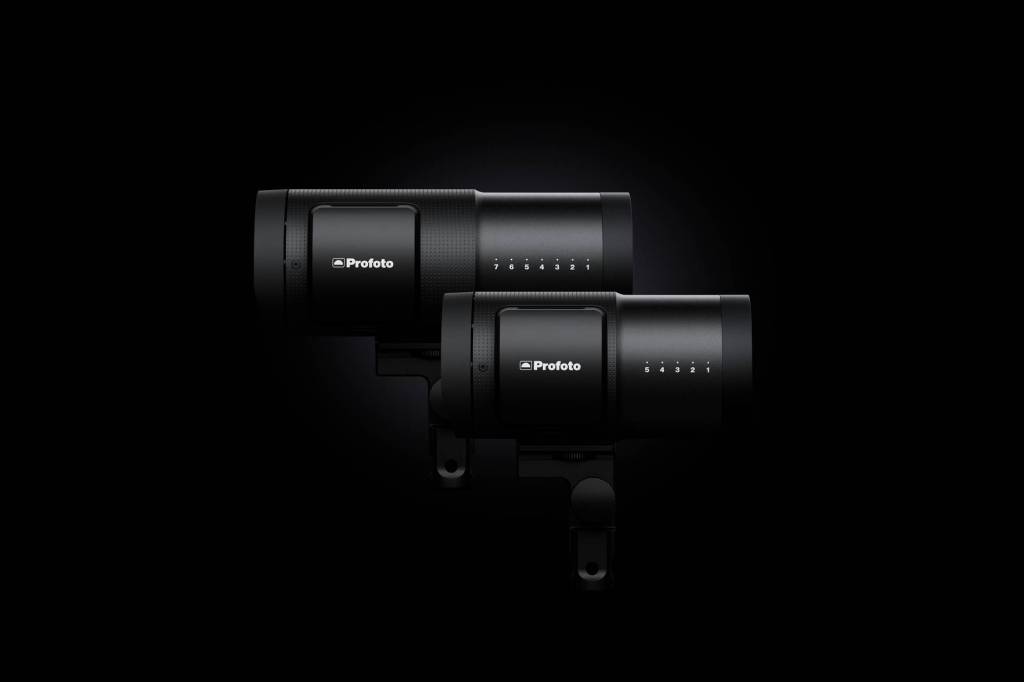
12 June 2025 I think the reason why the B10 is not supported is that Profoto have announced the B20 and B30 line of lights.
Courtesy Profoto
These new lights are a bit larger than the B10 and B10 Plus because the construction improvements allow them to bear a lot more weight. So a heavier modifier like the Spot Small is not a problem for the B20 or B30.
For now the B10x and B10x Plus are still on sale but it wouldn’t surprise me if the B20 and B30 are their direct replacements. They take the same batteries and having a sync port allows the new models to be used wired as well as wirelessly.
Woke up this morning to see that the Nikon RED purchase has created the first models with the Z mount. Together with the launch of the NIKKOR Z 28-135mm f/4 PZ lens it is now clear what direction they want to go in.
This is a start. When looking at “cinema” cameras, I never found any models that had native Nikon lens mounts. Now it is here, there is no longer a necessity for Nikon still photographers wanting a superior video capability to have a separate system.
RED have produced this video giving some information about the new Z mount cameras. I’m sure more will come out in the next few days and weeks when shipping starts. I’m especially interested in the cheaper KOMODO-X Z mount. If money was no object, this would be the model I would add to my camera bag.
I somehow managed to mis-load a roll of Harman Phoenix. So instead of throwing it away I decided to see if I could salvage the situation by redscaling it.
If you don’t know what redscale is, it is shooting colour film on the “wrong side” so you are basically flipping the film over. To be fair, I didn’t know what redscale was until recently.
When I sent the film off for processing I had no idea if I managed to wreck the roll when I mis-loaded it or when trying to flip the film over in the changing bag.
To be safe that I hadn’t taped the film back on to the backing paper in the wrong place, I took a couple of blank frames first. And to my surprise, the film came back with something on it.
It is definitely flipped over because the first frame was set to the correct exposure measured at 100 ISO but is very under exposed. Then the following six frames were exposed in plus one stop increments.
To my eye, the +5 exposure seems to be the best version.
It isn’t perfect but I do like the colours through this process. If Harman made some redscale rolls of Phoenix in 120 I would buy some. It is a real pain trying to flip the film over. I somehow attached the film to the numbered side of the backing paper rather than the black side as you can see the numbers leaked through to the film.
If you want to try this yourself, there are YouTube videos who have done a better job than me.
15 February 2025 Yesterday Harman announced that Harmon Red in 35mm was now for sale. I was worried watching the reviews on YouTube that the out of the box redscale film would be a one off and won’t be available in 120 format. On social media they have confirmed that 120 is being worked on and to watch this space.
Speaking of social media, I don’t really understand the hate for the Harman Phoenix project and the slow progress towards a polished product. For whatever reason, there are film photographers out there who want Harman to replicate other manufacturers’ film stocks that are already in existence. This makes no sense to me.
Back in the day when I was shooting film my choice was either Fuji or Kodak for colour and Kodak for black & white. I remember using a couple of Ilford XP C41 black & white films on a few occasions. What I don’t remember is getting wound up by what the companies were doing with their film stocks to send a letter in the post to complain if I didn’t like what was going on.
I get that back in the day that there were more varieties of film stocks compared to today. And that making comments on social media is part of the game. But really? If you don’t like what films are currently in production then you can always use a digital camera, tweak it and then post the picture online.
16 July 2025 Harman today launched Phoenix II which as the name suggests is the second iteration of the film. I thought I was going to have time to look at Harman Red after getting a couple of rolls a few weeks ago.
As this film has a strong red colour, the subject matter needs to be right. Shooting it on the wrong subject would be a disservice to it. So I’ve decided to put this on hold until after I’ve played with Phoenix II.
When Harman Phoenix came out with the 35mm version of the film a few months ago I really did want to support this project but wished they came out with the 120 version at the same time. Now that they have I got myself a few rolls.
I have sent off my first roll to the Harman Lab for processing. As soon as I have the film returned I’ll update on what it looks like.
7 October 2024 I had a WeTransfer link on 1 October from Harman Lab with the scans but didn’t want to post my thoughts until I managed to see the negatives that were waiting for me in the post.
I was using an A24 back on my Hasselblad 2000 FC which is why there is odd spacing in the processed film which I exposed at 100 ISO.
For each test frame I also over exposed it by 1 stop to see how the film would behave. Personally, I think shoot the film at 100 works fine rather then giving it an extra stop from 100.
I do like how the film behaves in much warmer light. The next test will be to see how the film responds to coloured light.
22 October 2024 The WeTransfer link from Harman Labs has come through from my test of the film under different coloured light.
The light I used was the Rotolight Neo in HSI mode, set from top to bottom, at 0 / 360, 60, 120, 180, 240, 300. I measured the exposure at 100 ISO and bracketed with a +1 stop.
Some of the frames came out better with the +1 stop but others came out best as measured.
I don’t know if the lab tried to white balance for the yellow in the 60 test as that came out with hardly any tint in it at all. It is interesting to see that the file data is showing as Fujifilm SP-3000 in this test while it was showing as NORITSU KOKI EZ Controller in my previous test.
Anyway, I have a roll which is being crossed processed in E6 so will have to see what that is like. I will update when that comes back.
29 October 2024 The cross processed roll came through the letter box this morning. From what I can see there is a bit of colour information in there but there isn’t a huge amount of difference with Ilford XP2.
It is very blue. There is a bit of green in the background which XP2 wouldn’t have being a black and white film.
My conclusion is, for me, that Harman Phoenix is worth spending the time and money on. I like the warm colours and with E6 film from Fuji getting really expensive for expired stock, I’m not keen on splashing out cash on Kodak. Keeping a UK company that is passionate about film photography and the journey ahead with this experimental product is what excites me. I can’t wait to play around with this film even more.
I can’t remember where I first heard about the NONS Instant Back. It must have been a review of it somewhere online.
If you don’t know what it is, it is a back that fits most Hasselblad square format film cameras so that you can use it with Fujifilm Instax Square film.
I’m not going to go into too much detail about it as others have done a better job.
Running my first pack of film through the back and I’m pretty impressed with it.
I’ve been mainly shooting transparency E6 film and this is very similar but with the advantage of a shorter time frame to see any results. I also like the softness of the Instax film and the higher ISO than the E6 rolls of film that I have.
Would love to try out the Instax Square Monochrome film to see what that is like.




 patrickphotos.blog